
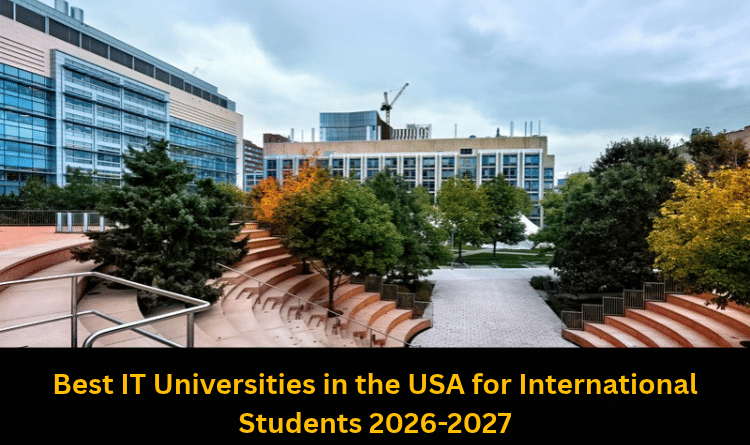
The United States is one of the leading destinations for international students who want to study Information Technology (IT), Computer Science, Software Engineering, and Artificial Intelligence. With world-renowned universities, advanced research facilities, and strong connections to the technology industry, the USA offers excellent opportunities for students planning careers in the digital world.
International students can explore a wide range of IT programs, including cybersecurity, data science, cloud computing, machine learning, and software development. Many American universities also provide research opportunities, internships, and practical learning experiences to help students develop industry-relevant skills.
Choosing the right university depends on your academic background, budget, preferred specialization, and career goals. This guide explores some of the best IT universities in the USA for international students, along with admission requirements, tuition considerations, and scholarship opportunities.
Why Study IT in the USA?
Studying IT in the United States can help international students gain technical knowledge and prepare for careers in a competitive global industry.
- World-Class Education: American universities offer advanced IT programs supported by experienced faculty and modern research facilities.
- Industry Connections: Many institutions collaborate with technology companies and provide opportunities for internships, research, and professional networking.
- Specialized Programs: Students can choose from fields such as artificial intelligence, cybersecurity, computer engineering, and data science.
- Practical Learning: Projects, laboratory work, and industry-focused assignments help students develop valuable technical skills.
- Career Opportunities: Graduates may pursue roles in software development, IT consulting, cloud computing, data analytics, and cybersecurity, subject to employer requirements and applicable work authorization rules.
- Research and Innovation: Students can participate in research projects involving emerging technologies and innovative digital solutions.
Best IT Universities in the USA for International Students
The following universities are recognized for their strengths in computing, computer science, information systems, and related technology fields. Program availability, tuition fees, and admission requirements vary by institution and degree level.
1. Massachusetts Institute of Technology
Massachusetts Institute of Technology is a leading choice for students interested in computer science, computing research, and technological innovation. Its academic environment emphasizes problem-solving, scientific research, and the development of advanced technologies.
Popular study areas:
- Computer Science and Engineering
- Artificial Intelligence and Machine Learning
- Robotics and Autonomous Systems
- Data Science and Computational Research
- Computer Systems and Algorithms
Why choose MIT?
MIT is particularly suitable for academically strong students interested in research, innovation, and challenging technical projects. Admission is highly competitive, so applicants should have excellent academic preparation and demonstrate strong intellectual interests.
Best for: Students targeting advanced computing, research, and technology innovation.
2. Stanford University
Located in California’s Silicon Valley region, Stanford University is an attractive destination for students interested in computer science, entrepreneurship, and the technology industry. Its location provides access to a major technology ecosystem and professional networking opportunities.
Popular study areas:
- Computer Science
- Artificial Intelligence
- Human-Computer Interaction
- Software Systems
- Data Science and Machine Learning
Why choose Stanford University?
Stanford combines academic learning with research and entrepreneurship. Students interested in technology startups, software innovation, and emerging digital products may find its environment particularly valuable.
Best for: Students interested in software development, AI, research, and technology entrepreneurship.
3. Carnegie Mellon University
Carnegie Mellon University is widely recognized for its computing-related education and research. It offers strong options for students who want to specialize in software systems, artificial intelligence, cybersecurity, and other technical disciplines.
Popular study areas:
- Computer Science
- Artificial Intelligence
- Information Security
- Software Engineering
- Human-Computer Interaction
- Machine Learning
Why choose Carnegie Mellon University?
The university emphasizes rigorous technical learning and research. Students can explore specialized areas of computing while developing analytical, programming, and problem-solving skills.
Best for: Students focused on AI, cybersecurity, software engineering, and advanced computing.
4. University of California, Berkeley
UC Berkeley is a prominent public research university offering strong academic opportunities in computer science and related engineering fields. Its computing programs combine theoretical foundations with research and practical applications.
Popular study areas:
- Computer Science
- Electrical Engineering and Computer Sciences
- Artificial Intelligence
- Data Science
- Computer Systems and Networks
Why choose UC Berkeley?
Students can benefit from a research-focused academic environment and access to the broader technology industry in the San Francisco Bay Area. International applicants should review the admission requirements and costs associated with their specific degree.
Best for: Students interested in computer science, data science, and engineering research.
5. Georgia Institute of Technology
Georgia Tech is a strong option for international students seeking technology-focused education with an emphasis on engineering, computing, and applied research.
Popular study areas:
- Computer Science
- Cybersecurity
- Artificial Intelligence
- Computing Systems
- Human-Computer Interaction
- Software Development
Why choose Georgia Tech?
The university offers a technology-oriented academic environment and a broad selection of computing specializations. Its programs can suit students who want to develop practical technical skills alongside a solid theoretical foundation.
Best for: Students interested in applied computing, engineering, and technical problem-solving.
6. University of Illinois Urbana-Champaign
The University of Illinois Urbana-Champaign is known for its research strengths in computer science, engineering, and information technology-related fields. It offers opportunities to explore computing through coursework, research, and technical projects.
Popular study areas:
- Computer Science
- Computer Engineering
- Data Science
- Artificial Intelligence
- Information and Computing Systems
Why choose the University of Illinois Urbana-Champaign?
Students can access a strong research environment and a broad academic community. The university may be suitable for those interested in software systems, computer architecture, data-driven technologies, and advanced computing.
Best for: Students seeking research-oriented computer science and engineering education.
7. University of Texas at Austin
The University of Texas at Austin provides a range of opportunities in computer science, computing research, and technology-related engineering. Austin’s growing technology sector also makes the city appealing to students seeking professional connections.
Popular study areas:
- Computer Science
- Artificial Intelligence
- Software Engineering
- Data Science
- Computer Systems
Why choose the University of Texas at Austin?
The university combines academic study with research opportunities and access to a growing technology ecosystem. Students should compare the admission requirements and total cost of attendance for their selected program.
Best for: Students interested in computer science, software development, and technology careers.
8. University of Washington
The University of Washington is a notable option for international students interested in computing, information systems, and technology research. Its Seattle location provides access to a major technology hub.
Popular study areas:
- Computer Science
- Computer Engineering
- Human-Computer Interaction
- Artificial Intelligence
- Data Science
Why choose the University of Washington?
Students can benefit from a strong academic environment and opportunities to explore computing research. Seattle’s technology sector may also provide networking and internship possibilities, depending on eligibility and availability.
Best for: Students interested in computing research, software systems, and technology industry exposure.
9. Purdue University
Purdue University offers technology-related programs through its computing and engineering disciplines. It is worth considering for students who want a strong technical education in a research-oriented university environment.
Popular study areas:
- Computer Science
- Computer Engineering
- Cybersecurity
- Artificial Intelligence
- Software Systems
Why choose Purdue University?
Purdue combines technical education with research and practical learning. International students can explore different computing pathways and select a program aligned with their academic background and future goals.
Best for: Students interested in computing, engineering, and applied technology.
10. University of Maryland, College Park
The University of Maryland, College Park, offers opportunities in computer science, cybersecurity, artificial intelligence, and related computing disciplines. Its location near Washington, D.C., may be valuable for students exploring technology, research, and information security.
Popular study areas:
- Computer Science
- Cybersecurity
- Artificial Intelligence
- Data Science
- Computer Systems
Why choose the University of Maryland?
Students can explore technical research and computing specializations in a large university setting. Those interested in cybersecurity and research should review the eligibility conditions for specific projects and employment opportunities.
Best for: Students interested in cybersecurity, computer science, and applied research.
Comparison of the Best IT Universities in the USA
University | Main IT Strengths | General Study Environment |
|---|---|---|
| MIT | Computing research, AI, robotics | Highly competitive, research-intensive |
| Stanford University | Computer science, AI, entrepreneurship | Research and innovation focused |
| Carnegie Mellon University | AI, cybersecurity, software systems | Specialized and technically rigorous |
| UC Berkeley | Computer science, data science | Public research university |
| Georgia Tech | Computing, cybersecurity, engineering | Technology and application focused |
| University of Illinois Urbana-Champaign | Computer science, computer engineering | Research-intensive |
| University of Texas at Austin | Computer science, software systems | Research and industry connections |
| University of Washington | Computing, AI, data science | Research and technology focused |
| Purdue University | Computer science, computer engineering | Technical and engineering focused |
| University of Maryland, College Park | Cybersecurity, AI, computer science | Research and computing focused |
Popular IT Courses in the USA for International Students
International students can choose from several IT-related degrees in the United States. The right option depends on their interests and previous education.
1. Computer Science
Computer Science focuses on programming, algorithms, software development, operating systems, and computational problem-solving. It is a flexible option for students interested in software engineering and advanced computing.
2. Information Technology
IT programs generally focus on managing computer systems, networks, databases, cloud services, and organizational technology infrastructure. Course content varies between universities.
3. Cybersecurity
Cybersecurity programs teach students how to protect digital systems, investigate security risks, and manage information security. Relevant topics may include network security, digital forensics, and security engineering.
4. Artificial Intelligence and Machine Learning
These programs explore intelligent systems, predictive models, machine learning algorithms, and automation. Students usually need a strong foundation in mathematics and programming for advanced study.
5. Data Science and Analytics
Data science combines statistics, programming, and analytical methods to interpret large datasets. Graduates may pursue opportunities in business analytics, data engineering, and related technical roles.
6. Software Engineering
Software engineering focuses on designing, developing, testing, and maintaining software applications. Students learn about programming practices, software architecture, project management, and quality assurance.
7. Cloud Computing
Cloud-related courses explore cloud infrastructure, distributed systems, virtualization, and scalable digital services. Some universities offer these topics within computer science or information systems degrees rather than as separate degrees.
Admission Requirements for IT Universities in the USA
Admission requirements vary according to the university, course, and degree level. International students should review the official requirements for their selected intake before submitting an application.
Undergraduate Admission Requirements
Students applying for a bachelor’s degree in IT or Computer Science may need:
- Completed secondary education equivalent to US high school requirements.
- Academic transcripts and certificates.
- Proof of English proficiency, if required.
- SAT or ACT scores where required or considered by the institution.
- Personal statement or application essays.
- Letters of recommendation, if requested.
- A valid passport and relevant application documents.
Postgraduate Admission Requirements
Applicants seeking a master’s degree in IT or Computer Science may need:
- A relevant bachelor’s degree or an accepted equivalent qualification.
- Official academic transcripts.
- English proficiency test results, where required.
- A statement of purpose.
- Letters of recommendation.
- A résumé or CV, if required.
- GRE scores, where applicable.
- Evidence of programming, mathematics, or technical experience for certain programs.
English Language Requirements
Many universities accept tests such as IELTS or TOEFL, while some may accept alternative examinations or approved exemptions. Minimum scores differ by institution and course.
Students should not assume that every university requires IELTS or that all universities offer admission without an English proficiency test. Always verify the current policy before applying.
Tuition Fees for IT Universities in the USA
The cost of studying IT in the USA depends on the institution, degree level, program duration, and residency classification. International students at public universities generally pay nonresident or international tuition rates, while private universities set their own fees.
Highly selective private universities and some public research institutions can be expensive. Students should also budget for housing, meals, health insurance, books, transportation, and university fees.
Expense | Estimated Annual Cost (USD) |
|---|---|
| Tuition at many public universities | $25,000–$50,000 |
| Tuition at many private universities | $40,000–$70,000+ |
| Accommodation and living expenses | $15,000–$25,000 |
| Books, supplies, and personal expenses | $1,000–$3,000 |
| Health insurance and other fees | Varies by university |
Actual expenses may fall outside these ranges, particularly at high-cost universities and in expensive cities. Before accepting an offer, check the institution’s published international tuition rates and estimated cost of attendance for the relevant academic year.
Scholarships for International Students
Scholarships can help international students manage the cost of an American education. However, financial assistance varies by university, degree level, academic achievement, and funding availability.
Types of Scholarships to Explore
Merit-Based Scholarships: These awards recognize strong academic performance, leadership, or other achievements. Availability for international students differs between institutions.
University-Specific Funding: Some universities provide scholarships, fellowships, or departmental awards to eligible international applicants. Certain awards are restricted to specific programs or graduate researchers.
Graduate Assistantships: Eligible postgraduate students may find teaching or research assistantships. These positions are competitive and depend on departmental funding and academic qualifications.
External Scholarships: Students can investigate independent foundations, government-sponsored programs, and other funding organizations that support international education.
How to Improve Your Scholarship Chances
- Maintain strong academic results.
- Prepare a clear statement of purpose.
- Highlight relevant IT projects, programming skills, and achievements.
- Obtain strong recommendation letters where required.
- Apply before scholarship deadlines.
- Check whether international students are eligible for each award.
- Review whether funding covers tuition, living expenses, or only part of the total cost.
Full scholarships are competitive and are not guaranteed. Students should prepare a realistic financial plan even when applying for funding.
Student Visa Requirements for the USA
International students who plan to study full-time in the United States generally need the appropriate student immigration status. Many academic students attend on an F-1 visa, although the correct category depends on the program and circumstances.
The usual process involves:
- Apply to a Student and Exchange Visitor Program (SEVP)-certified institution.
- Receive an admission offer and the required Form I-20.
- Pay the applicable I-901 SEVIS fee.
- Complete the DS-160 visa application.
- Pay the visa application fee and schedule an interview, as required.
- Prepare evidence of financial support, academic documents, and other requested paperwork.
- Attend the visa interview and follow the official instructions.
Admission to a university does not guarantee visa approval. Students should consult official US government guidance for current requirements, fees, and appointment procedures.
Work Opportunities After Studying IT in the USA
An IT degree can prepare graduates for a variety of technical careers. Employment outcomes depend on a student’s skills, experience, location, and work authorization.
Potential career paths include:
- Software Developer
- IT Support Specialist
- Cybersecurity Analyst
- Data Analyst
- Systems Analyst
- Cloud Engineer
- Database Administrator
- Machine Learning Engineer
- Network Engineer
- Software Quality Assurance Engineer
Optional Practical Training (OPT)
Eligible F-1 students may apply for Optional Practical Training (OPT), which can provide temporary work authorization related to their field of study, subject to applicable rules.
Certain qualifying STEM degree programs may be eligible for a 24-month STEM OPT extension in addition to the standard post-completion OPT period. Eligibility depends on the degree, employer, employment arrangement, and other requirements. Students should confirm their situation with their university’s designated school official and official US immigration guidance.
Working during studies and after graduation is subject to immigration restrictions. Students should never assume that enrollment automatically grants unrestricted employment rights.
How to Choose the Right IT University in the USA
Selecting a university involves more than comparing rankings. International students should evaluate the full academic and financial picture before making a decision.
Consider Your Specialization
Start by identifying your preferred field, such as software engineering, cybersecurity, data science, or artificial intelligence. Compare the actual curriculum and available research opportunities rather than relying only on a university’s general reputation.
Compare Tuition and Living Costs
Calculate tuition, accommodation, insurance, transportation, and other expenses. A university with lower tuition may still be expensive if housing and daily living costs are high.
Review Admission Requirements
Check whether your previous qualification meets the entry requirements. Some computing programs expect mathematics, programming, or other prerequisite courses.
Explore Scholarships
Review financial aid opportunities for international applicants and confirm the application deadlines. Do not assume that every scholarship is available to all students.
Evaluate Location and Career Goals
Consider the local technology industry, campus facilities, internships, and professional networking opportunities. Remember that internships and employment depend on availability, eligibility, and applicable work authorization.
Check Accreditation and Program Details
Verify the institution’s official status and review the curriculum, faculty, research facilities, and graduate outcomes where reliable data is available.
How UNIMENTOR Can Help You Study in the USA
Planning to study IT in the USA for 2027 can involve several steps, from selecting a suitable university to preparing application documents and reviewing your budget.
UNIMENTOR Study Abroad Consultants can help students explore university options, understand admission requirements, organize application documents, and identify potential scholarship opportunities. Guidance can also help applicants compare programs according to their academic backgrounds and future career goals.
Every student’s situation is different, so university selection should be based on individual qualifications, budget, and preferred specialization. Students should confirm admission decisions, tuition fees, scholarship terms, and visa requirements directly with the relevant institutions and official authorities.
Frequently Asked Questions (FAQs)
1. Which university is best for IT in the USA?
MIT, Stanford University, Carnegie Mellon University, UC Berkeley, and Georgia Tech are among the prominent options for computing-related study. The best choice depends on your specialization, qualifications, budget, and career objectives.
2. What are the best IT courses to study in the USA?
Popular options include Computer Science, Information Technology, Cybersecurity, Artificial Intelligence, Data Science, Software Engineering, and Cloud Computing.
3. How much does it cost to study IT in the USA?
Tuition and living costs vary significantly. As a broad planning estimate, annual tuition may range from approximately $25,000 to $70,000 or more, depending on the university, with additional living expenses and fees.
4. Can international students get scholarships for IT programs in the USA?
Yes, some universities and external organizations offer scholarships or other financial assistance to eligible international students. Availability, eligibility, and award amounts vary, and funding is not guaranteed.
5. Can Pakistani students study IT in the USA?
Yes. Pakistani students can apply to suitable US universities if they meet academic, English-language, financial, and other admission requirements. They must also satisfy the relevant student visa requirements.
6. Is IELTS required for IT universities in the USA?
Many institutions require proof of English proficiency, but accepted tests and exemption policies vary. Students should check the rules of each university and program.
7. Can international students work after completing an IT degree in the USA?
Eligible F-1 graduates may apply for OPT. Certain qualifying STEM graduates may also be eligible for a STEM OPT extension. Work authorization is subject to applicable immigration requirements.
8. When should I apply for US universities?
Application deadlines vary by institution, program, and intake. Students planning to start in 2026-2027 should research deadlines well in advance and allow time for test preparation, financial documentation, scholarship applications, and visa processing.
Conclusion
The USA offers international students a wide range of opportunities to study IT, Computer Science, and emerging technologies. Universities such as MIT, Stanford, Carnegie Mellon, UC Berkeley, Georgia Tech, and other leading institutions provide different academic pathways for students interested in software development, artificial intelligence, cybersecurity, and data science.
Before applying, compare university requirements, total costs, scholarships, program content, and career-related opportunities. With careful planning and the right university choice, international students can build a strong academic foundation for a future in the technology industry.









Leave a Reply