
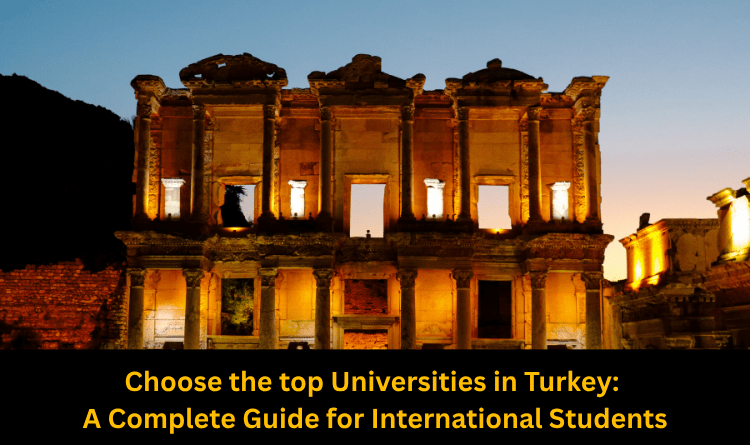
Choosing the right university is one of the most important decisions when planning to study abroad. Turkey has become an attractive destination for international students because it offers a wide range of academic programs, modern universities, diverse student communities, and different options for students with different budgets.
However, choosing the top university in Turkey should not be based only on its ranking or popularity. The best university for one student may not be the right choice for another. Your academic background, preferred program, budget, career plans, language requirements, and preferred city should all be considered before making a decision.
This guide explains the key factors international students should consider when selecting a Turkish university.
Why Consider Studying at a University in Turkey?
Turkey offers a higher education system with universities ranging from large public institutions to private and foundation universities. Students can find bachelor’s, master’s, doctoral, and professional programs in fields such as engineering, business, medicine, computer science, architecture, social sciences, and many others.
Another important advantage is the variety of study environments. Students can choose between major cities such as Istanbul and Ankara or consider universities in other Turkish cities depending on their academic and lifestyle preferences.
For Pakistani students, Turkey can also provide an opportunity to experience a different culture while studying in an increasingly international academic environment.
1. Start With Your Preferred Degree Program
The first step is to decide what you want to study.
Instead of searching for universities first, identify your preferred degree and specialization. For example, a student interested in technology might compare computer science, software engineering, artificial intelligence, or information systems programs.
When comparing programs, look at:
- Course subjects
- Program duration
- Specializations
- Teaching language
- Practical training
- Laboratory facilities
- Internship opportunities
- Research opportunities
- Career services
- Entry requirements
Two universities may offer the same degree title but have completely different course structures. Therefore, read the curriculum carefully before applying.
2. Check the University’s Academic Reputation
University reputation can be an important factor, particularly if you plan to continue your education or build an international career.
When researching a Turkish university, look at its:
- Academic reputation
- Faculty qualifications
- Research activities
- International partnerships
- Accreditation
- Academic facilities
- Graduate outcomes
- Recognition of the degree
Ranking universities can be useful as one reference point, but they should not be the only factor in your decision.
A university with a strong ranking may not necessarily offer the specific program, tuition level, location, or teaching environment you need.
3. Compare Public and Private Universities
Turkey has both public universities and private/foundation universities.
Public Universities
Public universities can offer a wide range of academic programs and may have different admission procedures and tuition structures for international students.
Private or Foundation Universities
Private and foundation universities may offer modern campuses, international programs, English-taught degrees, scholarships, and different payment options.
The important thing is to compare universities based on your individual requirements rather than assuming that one category is automatically better.
Before applying, check the university’s official website for current tuition fees, admission requirements, scholarship conditions, and application deadlines.
4. Compare Tuition Fees Carefully
Tuition fees are one of the most important factors for international students.
Fees can vary according to:
- University
- Degree level
- Academic program
- Teaching language
- Faculty
- Student status
- Scholarship or discount
For example, a business program and a medical program may have very different costs at the same university.
Don’t look only at the advertised tuition fee. Check whether there are additional expenses such as registration fees, laboratory fees, examination charges, accommodation, insurance, or other university-related costs.
Make a Simple Budget
Before selecting a university, calculate:
Tuition + Accommodation + Food + Transportation + Health/Insurance + Personal Expenses
This will give you a more realistic idea of the total cost of studying in Turkey.
5. Look for Scholarships and Tuition Discounts
Scholarships can significantly reduce the overall cost of studying abroad.
International students should check both:
- University-specific scholarships
- Government or external scholarship opportunities
Some universities may provide scholarships based on academic performance, while others may offer discounts according to their own international student policies.
Always check the conditions carefully. A scholarship may cover a percentage of tuition rather than living expenses.
Also confirm:
- Scholarship percentage
- Duration
- Renewal requirements
- Academic conditions
- Whether it covers tuition only
- Whether accommodation is included
Never assume that a scholarship will continue automatically throughout your degree.
6. Choose the Right City
The location of your university can have a major impact on your student experience.
Istanbul
Istanbul is one of Turkey’s largest and most internationally connected cities. It offers a large student population, diverse communities, transportation options, businesses, and cultural attractions.
However, students should also consider the cost of living when selecting a university in Istanbul.
Ankara
Ankara is Turkey’s capital and has several established universities. Students interested in a more academic and administrative environment may consider universities in the capital.
Izmir
Izmir is another major Turkish city with universities and a coastal lifestyle. Students may consider it depending on their academic program, budget, and personal preferences.
Don’t Choose a City Only Because It Is Popular
Consider:
- Monthly living costs
- Transportation
- Accommodation availability
- Distance from campus
- Student lifestyle
- Climate
- Part-time opportunities where legally permitted
- Access to airports and public transportation
7. Check the Language of Instruction
Language is an important factor when selecting a Turkish university.
Some programs are taught in English, while others may be taught in Turkish. There may also be programs with a combination of languages.
Before applying, confirm:
- Does the program offer complete instruction in English?
- Will you need to complete a language preparation year?
- Which English-language tests does the university accept?
- Is Turkish language proficiency required?
- Are preparatory courses available for international students?
Pakistani students who prefer to study in English should pay particular attention to the official language of instruction rather than relying only on the university’s general description.
8. Understand Admission Requirements
Every university and program can have different admission requirements.
For undergraduate admission, universities may ask for academic certificates, transcripts, passport documents, photographs, and other supporting documents. Some programs may have additional requirements.
Master’s and doctoral programs, requirements can include:
- Bachelor’s or master’s degree
- Academic transcripts
- CV
- Statement of purpose
- Recommendation letters
- Language test
- Research proposal for certain programs
- Entrance interview or examination
Always check the requirements for your specific program, not just the general university admission page.
9. Check Whether Your Previous Education Meets the Requirements
Before applying, make sure your previous qualification is acceptable for the program.
For example, master’s applicants should confirm whether their bachelor’s degree is considered relevant to their intended field.
Students should also check:
- Minimum grades
- Required subjects
- Degree equivalency requirements
- Academic gaps, if relevant
- Program-specific prerequisites
Preparing these documents early can make the application process easier.
10. Research University Accreditation and Recognition
Accreditation and recognition are important considerations when choosing a university abroad.
Before paying an application or tuition fee, verify the university and program through reliable official sources.
Students should particularly check recognition when planning to work or continue education in another country after graduation.
For professional fields such as medicine, dentistry, engineering, architecture, and other regulated professions, program-specific recognition or accreditation can be especially important.
11. Examine Campus Facilities
A university’s facilities can influence your academic experience.
When researching a university, look for:
- Libraries
- Computer laboratories
- Science laboratories
- Research centers
- Classrooms
- Sports facilities
- Student clubs
- Cafeterias
- Study areas
- Career centers
- International student offices
If possible, explore the university’s official campus information, virtual tour, photographs, and student services before making your final decision.
12. Explore Internship and Career Support
Your university experience should prepare you for your future career.
Check whether the university provides:
- Internship guidance
- Career counseling
- Job fairs
- Industry partnerships
- Professional workshops
- Research opportunities
- Alumni networks
- Entrepreneurship support
The availability of these services can vary between universities and programs.
Students should also research the career opportunities associated with their specific degree, rather than assuming that attending a famous university automatically guarantees employment.
13. Consider International Student Support
Moving to another country can be challenging, especially during the first few months.
A university with dedicated international student services may help students understand university procedures and settle into campus life.
Look for services such as:
- International student office
- Orientation programs
- Residence guidance
- Academic advising
- Student clubs
- Language support
- Visa-related guidance where provided
- Accommodation assistance
You can also search for student communities and international societies associated with the university.
14. Check Accommodation Options
Accommodation is another major part of your study-abroad budget.
Universities may have different accommodation options, while students can also consider private housing depending on availability and local rules.
Before choosing a university, research:
- University dormitories
- Private student residences
- Shared apartments
- Monthly rent
- Utility costs
- Distance from campus
- Transportation costs
- Security and facilities
A university with lower tuition may not necessarily be cheaper overall if accommodation and transportation costs are significantly higher.
15. Research Transportation
Transportation can affect your daily routine and monthly expenses.
Check how easily you can travel between:
Accommodation → University → City Center → Airport
Large Turkish cities generally have extensive public transportation systems, but your daily travel time can still vary significantly depending on where you live.
Choosing accommodation close to campus can save both time and transportation costs.
16. Look at Student Life
University life is more than attending classes.
Before choosing a university, explore its student activities, clubs, societies, sports, cultural events, and international student communities.
A diverse student environment can help international students:
- Make new friends
- Practice languages
- Participate in activities
- Learn about different cultures
- Build professional connections
- Become more comfortable in a new country
17. Check the University’s International Connections
International partnerships can be useful for students interested in exchange programs, international research, or further study.
Research whether the university has:
- International exchange programs
- Partner universities
- Erasmus opportunities
- Research collaborations
- International conferences
- Double-degree or joint-degree opportunities
Availability can vary by university and program, so verify the details directly with the institution.
18. Read Reviews Carefully
Student reviews can help you understand everyday university life, but they should be treated as one source of information.
Look for repeated patterns in reviews rather than relying on a single positive or negative comment.
You can research opinions about:
- Teaching quality
- Accommodation
- Administration
- Campus facilities
- International student support
- Location
- Student life
Then compare those comments with information from the university’s official sources.
19. Check Visa and Immigration Requirements Separately
Admission to a Turkish university and obtaining permission to study in Turkey are separate parts of the process.
After receiving admission, students should check the current official requirements for their nationality, visa category, residence procedures, and required documents.
Requirements can change, so Pakistani students should rely on current information from relevant Turkish government or diplomatic sources rather than old social media posts or outdated blogs.
20. Create a University Shortlist
Instead of applying randomly, create a shortlist.
A useful approach is to divide your options into categories such as:
1: Academic Fit
Universities offering your preferred program and specialization.
2: Budget Fit
Universities whose tuition and living costs fit your financial plan.
3: Location Fit
Universities located in cities that match your lifestyle and transportation preferences.
Then compare the shortlisted universities using the same criteria.
University Comparison Checklist
Factors What to Check
Program Course structure and specialization
Tuition Annual tuition and additional fee
Scholarship Eligibility and renewal conditions
Language English or Turkish
Admission Academic and document requirements
Recognition University and program recognition
Location City and living environment
Accommodation Dorms, rent and availability
Facilities Labs, library and campus services
Career Internships and career support
International Support Services for international students
Student Life Clubs, societies and activities
Transportation Campus and city connectivity
Common Mistakes Students Should Avoid
Choosing Only Based on Ranking
A high ranking does not automatically mean the university is the right fit for your program and budget.
Looking Only at Tuition Fees
Remember that accommodation, food, transportation, insurance, and personal expenses also contribute to the total cost.
Ignoring the Language of Instruction
Always verify whether your selected program is actually taught in English.
Applying Without Checking Requirements
Different programs can have different academic and language requirements.
Depending on Old Information
Tuition fees, scholarships, admission requirements, and immigration procedures can change. Check current official information before making decisions.
Choosing a University Without Checking Recognition
This can become important if you plan to work in a regulated profession or continue your education in another country.
Final Thoughts
Choosing a top university in Turkey requires more than looking at university rankings. International students should consider the complete picture, including academic programs, tuition fees, scholarships, language, admission requirements, accreditation, location, accommodation, campus facilities, student support, and career opportunities.
For Pakistani students, researching these factors before applying can help create a realistic study plan and reduce unexpected costs or admission issues.
If you are unsure which Turkish universities and programs match your academic background and budget, Unimentor Study Abroad Consultants can help you understand your available study-abroad options, compare requirements, and prepare your application journey.
FAQs
1. What factors should I consider before selecting a Turkish university?
Consider the degree program, tuition fees, scholarships, language, admission criteria, location, recognition, accommodation, and career opportunities.
2. Why do international students choose Turkey for higher education?
Turkey offers a variety of universities, academic programs, study environments, and options for international students.
3. Can Pakistani students apply to universities in Turkey?
Pakistani students can apply if they meet the academic, language, documentation, and other requirements of their selected university.
4. Which study programs are available in English in Turkey?
Many Turkish universities offer selected English-taught programs, depending on the university and academic field.
5. How much does it cost to study at a Turkish university?
The total budget may include tuition, accommodation, food, transportation, insurance, and personal expenses.
6. Where can international students find scholarships in Turkey?
Scholarships may be available through Turkish universities, government programs, and other organizations, depending on eligibility.
7. Are public and private universities different in Turkey?
Yes, they can differ in tuition fees, admission procedures, programs, facilities, and scholarship opportunities.
8. Which Turkish cities offer universities for international students?
Istanbul, Ankara, Izmir, Bursa, Antalya, and other cities have universities offering various programs for international students.
9. What documents are required for Turkish university admission?
Common documents may include academic certificates, transcripts, passport, photographs, language-test results, and program-specific documents.
10. How can Unimentor help students study in Turkey?
Unimentor Study Abroad Consultants can assist with university selection, program options, applications, admission procedures, and study-abroad guidance.










Leave a Reply