
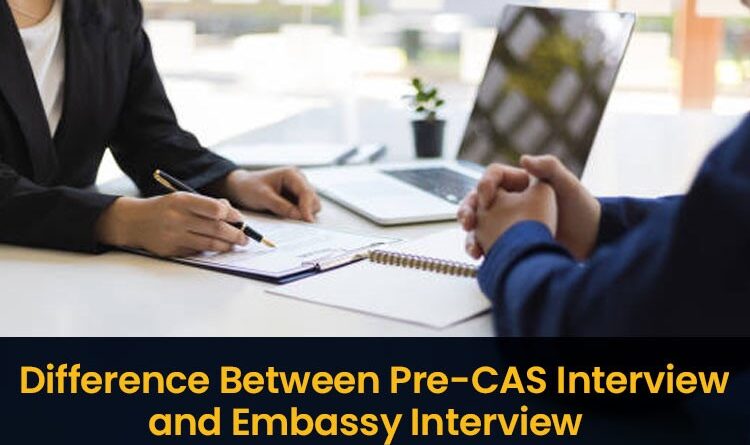
For international students planning to study abroad, the journey often involves multiple steps, including visa applications and interviews. Two crucial stages in this process are the Pre-CAS (Confirmation of Acceptance for Studies) interview and the Embassy interview. While both serve as checkpoints, they differ in purpose, structure, and consequences. Let’s explore the key distinctions.
1. Purpose of the Interviews
Pre-CAS Interview
- Conducted by the university or college issuing the CAS letter.
- The primary goal is to assess the student’s genuineness, intentions, and eligibility for the course.
- Verifies whether the student understands their chosen course, institution, and how it aligns with their career goals.
Embassy Interview
- Conducted by the immigration department of the destination country (e.g., UKVI for the UK, USCIS for the USA).
- The focus is on visa approval. This includes checking the applicant’s financial stability, ties to their home country, and their intent to return after studies.
- Ensures the student meets the country’s immigration rules.
2. Who Conducts the Interviews?
Pre-CAS Interview
- Conducted by the university’s admissions or compliance team.
- Typically done online via platforms like Zoom, Skype, or Teams.
Embassy Interview
- Conducted by a consular officer or immigration official.
- Usually takes place in person at the embassy or consulate, though some countries may allow virtual interviews.
3. Format and Content
Pre-CAS Interview
- Focuses on academic and course-related questions.
- Common questions include:
- Why did you choose this university?
- Why this course?
- How does it fit into your career plans?
- Duration: Generally shorter, around 30–35 minutes.
Embassy Interview
- Covers broader topics, including financial, personal, and immigration-related aspects.
- Common questions include:
- How will you fund your education?
- Do you have ties to your home country?
- What are your post-graduation plans?
- Duration: Typically longer, 30–40 minutes or more.
4. Consequences of the Interview
Pre-CAS Interview
- If the interview is unsuccessful, the university may refuse to issue a CAS letter, effectively halting the visa process.
- Feedback is sometimes provided, allowing students to reapply or improve their responses.
Embassy Interview
- If unsuccessful, the visa is denied, and the student cannot travel to their destination country.
- Appeals or reapplications are possible but can be time-consuming and costly.
5. Preparation Required
Pre-CAS Interview
- Research your course, university, and career goals.
- Practice answering questions about your academic background and motivations.
- Strong internet connection
- Completey Knowledge about course, university and accommodation.
Embassy Interview
- Prepare financial documents, proof of ties to your home country, and other visa requirements.
- Be ready to explain your plans clearly and confidently.
Conclusion
Both the Pre-CAS Interview and the Embassy Interview play essential roles in the study abroad process, but they evaluate different aspects of a student’s application. The Pre-CAS interview determines whether a university believes you are a genuine and suitable student for admission, while the Embassy interview focuses on whether you meet immigration and visa requirements.
Success in both interviews depends on preparation, honesty, confidence, and having a clear understanding of your academic and future career goals. With proper planning and accurate documentation, students can approach both stages with greater confidence and increase their chances of achieving their study abroad goals.
FAQs
1. Is the Pre-CAS interview difficult?
Not necessarily. Universities mainly want to confirm that you are a genuine student who understands your course choice and future goals.
2. Can I get a visa without passing the Pre-CAS interview?
No. For countries and universities that require a CAS process, receiving the CAS letter is usually necessary before applying for a student visa.
3. Does the Embassy interview ask academic questions?
Yes, but embassy interviews usually focus more on finances, study intentions, and immigration compliance than academic details.
4. What documents should I prepare for an Embassy interview?
Typically:
- Passport
- Offer/CAS letter (if applicable)
- Financial documents
- Academic transcripts
- Accommodation details
- Visa application documents
5. Can I reapply if my visa gets refused?
In many cases, yes. However, requirements and timelines vary by country, and students should address the reasons for refusal before reapplying.
6. How can I improve my interview performance?
Practice common questions, stay calm, answer honestly, and ensure you fully understand your course, university, finances, and future plans.






Comment (1)
Hi,
Great explanation of the difference between Pre-CAS and Embassy interviews. This article makes the process much easier to understand for students planning to study abroad. Thanks for sharing such useful guidance!